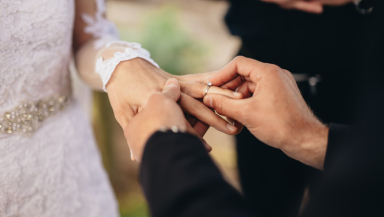
The Marriage Foundation has voiced concern over newly released figures from the Office for National Statistics (ONS), which show a 9% fall in heterosexual marriages in England and Wales during 2023.
The organisation says the drop masks a much deeper, long-term shift brought about by the Covid-19 pandemic.
According to the foundation’s Research Director, Harry Benson, tens of thousands of couples whose ceremonies were called off because of the lockdown restrictions have still not rescheduled.
While wedding numbers have edged upward since 2019, the total increase across the three post-lockdown years amounts to only around 18,000 — far below the estimated 130,000 weddings lost during 2020, when the UK recorded one of the steepest declines in Western Europe.
Recent ONS figures also reveal that fewer than half of adults are now married.
Mr Benson remarked: “That so many couples appear to have abandoned their wedding plans is incredibly sad for them, their friends and families. But it may also have a serious knock-on effect on commitment.”
He emphasised that the public commitment involved in marrying plays a significant psychological role, providing couples with “support and affirmation” as they take what he described as “the most risky decision of their lives.”
The foundation believes that some couples may simply have paused their wedding plans in favour of having children or purchasing a home, though it cautions that there is no certainty they will return to the idea of marrying.
Despite the decline in weddings, divorces have fallen to their lowest point since 1970. Yet Mr Benson warns that family instability remains a major challenge in the UK, with nearly 50% of all teenagers no longer living with both of their biological parents.
He explained: “This has knock-on effects on child poverty, crime, education and mental health. Until our national policies encourage couples to make the formal commitment of marriage, this situation will get worse.”
The foundation is urging policymakers to remove financial barriers to marriage, arguing that formal commitment remains the strongest predictor of couples staying together.