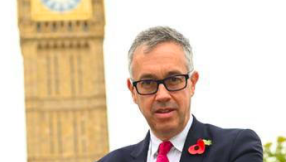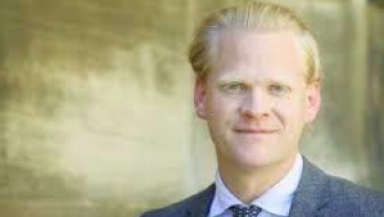
Cambridge theologian James Orr has been appointed to be a senior adviser to Nigel Farage and his party, Reform UK.
Speaking to The Telegraph, Orr said that “the politics of national self-interest” should replace the traditional politics of Left and Right.
He said his role in academia had allowed him to meet hundreds of young students who could form the nucleus of a new, pro-British elite.
Orr has been given a broad remit by Farage, but a key part of his role will be cultivating a network of potential defectors from the traditional parties and vet potential candidates for Reform.
“Reform wants to bring the country together. We need posh as well as bosh," he said.
If true, Orr could have a substantial impact on British politics. Although Reform UK currently boasts just five MPs, recent polling suggests there is a very credible possibility that the party will have a majority, or at least the largest number of seats at the next election.
Nigel Farage has previously clashed with the hierarchy of the Church of England, who he accused of being “out of touch” with their congregations on the matter of mass immigration.
The Archbishop of York and then acting head of the Church, Stephen Cottrell, told The Mirror that Reform’s plans for the mass deportation of illegal immigrants were “beneath us as a nation”.
Orr joins a number of high-profile figures flocking to Farage’s banner. Among them is Christian MP, Danny Kruger, who recently announced his defection from the Conservatives.
Historian David Starkey is another supporter. Although he remains a card carrying member of the Conservatives, Starkey has proposed that the first order of business for a potential Reform UK government would be a “Great Repeal Bill” aimed at undoing everything Tony Blair and his successors - both Tory and Labour - have done to the country since 1997.
Farage, who as things stand could well be Britain’s next prime minister, has been criticised for his poor track record of retaining talent.
Rupert Lowe, Ben Habib, Stephen Woolfe, Godfrey Bloom, Suzanne Evans, Patrick O’Flynn, Douglas Carswell and Alan Sked have all been cited as examples of those who have been sidelined by Farage during his long career.