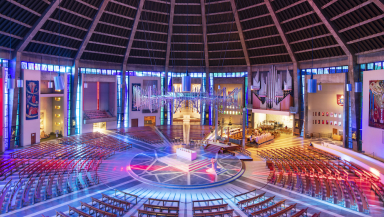
Just shy of 200 historic locations were added to the National Heritage List in 2025, according to Historic England. They include a number of churches, including Liverpool Metropolitan Cathedral of Christ the King, which was upgraded from Grade II* to Grade I.
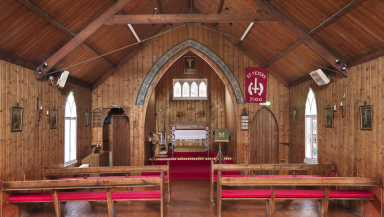
One of the less famous of the 199 new additions is St Peter’s Church, Littlebury Green in Essex. The Victorian church was described by Historic England as a “gem of corrugated iron, faith and rural ingenuity”.
Essentially a 19th century prefabricated church, the 'tin tabernacle' was built in 1885 for people who lived far away from the main parish church. The nature of the building meant that such churches could be quickly and easily erected.
Most of these constructions were subsequently dismantled, replaced or moved. St Peter’s is a rare case of such a church remaining in its original setting and largely in its original condition.
St Peter’s tin construction is more than functional. The church also features two decorative chairs, and paintings of the Stations of the Cross, which were all part of the original set up.
The exterior of the chancel arch features a decorative tin border, in the form of a scroll. The border is inscribed in black with a quote from Psalms 26:6 which says, ‘I WILL WASH MY HANDS IN INNOCENCY/AND SO WILL I GO TO THINE ALTAR. ’The words ‘innocency’ and ‘thine altar’ are in red.
Other sites listed include a millennia old burial mound in the Yorkshire Dales that may date back as far as 3,400 BC, a Victorian shipwreck in Dorset, and World War Two-era “Dragon’s Teeth” in Surrey – small concrete pyramids intended to impede the movement of enemy tanks.
Claudia Kenyatta and Emma Squire, Co-CEOs of Historic England, said: "These newly protected places demonstrate the remarkable diversity of England's heritage. They connect us to the people and events that shaped our communities.”
Heritage Minister Baroness Twycross said: “Britain’s heritage is as varied as it is brilliant, with each of these buildings playing a part in shaping our national story over the centuries.
“This year alone we have protected 199 heritage sites, from neolithic cairns in the Yorkshire Dales to the fabulous Catholic Cathedrals in the heart of Liverpool. I’m proud that we’re safeguarding our rich history so future generations can continue to enjoy it."