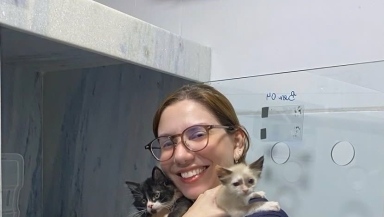
A Brazilian veterinary student has been vindicated by a Federal Regional Court which ruled that she has no case to answer over online posts stating that transgender women “were obviously born male”.
Isadora Borges made her comments on X in 2020. She also posted, “A person who identifies as transgender retains their birth DNA. No surgery, synthetic hormone, or clothing change will change this fact…”
Her posts drew the ire of Brazilian transgender politician Erika Hilton, who went to the police alleging “transphobia”.
In 2019 the Supreme Federal Tribunal declared that “homophobia” and “transphobia” are equivalent to crimes of racism. Had Borges been found guilty, she would have faced up to five years in jail.
However, the Federal Regional Court of the 5th Circuit unanimously declared that all charges would be dismissed and the case closed. The court said that Borges’ comments contained no hostility or threats to any transgender individuals, nor was there any incitement to violence.
Borges, who was supported by ADF International, said, “The court’s decision brings me great relief and hope that free speech will be protected in Brazil. The truth matters. Stating biological facts in a post should never result in prison time. All Brazilians deserve to speak freely and stand for what they believe in, even if their views differ from those in power.”
ADF said it hoped the case would act as a precedent that would help protect freedom of speech in Brazil. The group noted that in recent years a number of cases have been brought against people who have voiced traditional viewpoints on questions of sex and gender, thanks largely to the 2019 decision by the Supreme Federal Tribunal.
Julio Pohl, legal counsel at ADF International, said, “We commend the court for its decision in Isadora’s favour. This is a promising win for freedom of speech in Brazil, but this never should have happened in the first place.
"Even when charges are dismissed, the effect of this kind of censorial overreach is to chill speech across the entire country as people watch what they say for legitimate fear of criminal prosecution.
“Censorship cases similar to Isadora’s are ongoing and continuing to emerge in Brazil. We must continue to push back against the rampant censorship we have seen in the country, until no Brazilian fears being punished for peaceful expression.”