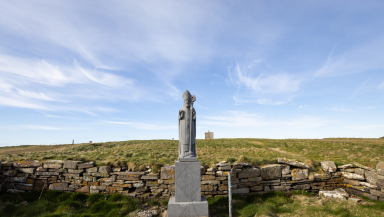
On March 17 every year, people in Ireland and across the world celebrate St Patrick’s Day. What began as a religious feast has grown into a global celebration of Irish culture, history and identity.
But who was St Patrick, and why is he remembered centuries later? His story is one of hardship, faith and a remarkable mission that changed the course of Ireland’s history. So, let’s dive right into it.
Who was St Patrick?
St Patrick is the patron saint of Ireland and is widely known for helping to bring Christianity to the country during the 5th century.
Interestingly, Patrick was not originally Irish. He was born in Roman Britain to a wealthy Christian family, although his exact birthplace is debated. In Confessio, Patrick states that he was from Banna Venta Berniae, a settlement believed by some scholars to have been located in modern-day Wales but possibly further north on the west coast of England and even perhaps in south-western Scotland.
His father, Calpurnius, served as a church deacon and held a local civic role. Although Patrick grew up in a Christian home, he later admitted that his faith was not particularly strong during his early years.
Everything changed when he was just 16 years old.
Captured and enslaved in Ireland
As a teenager, Patrick’s life took a dramatic turn. Irish raiders attacked his home and carried him across the sea to Ireland, where he was sold into slavery. For six long years, Patrick worked as a shepherd, living in isolation and hardship. During this difficult time, he turned deeply to prayer and began to grow in his Christian faith.
Later, he wrote that he prayed constantly, even through harsh weather and long nights alone in the hills. Eventually, Patrick believed he received a message in a dream telling him that a ship was ready to take him home.
Acting on that belief, he escaped his enslaver and travelled a long distance across Ireland to the coast. There he found sailors preparing to depart and persuaded them to allow him on board. The ship likely took him to Gaul, in what is now France, where he endured a difficult journey and came close to starvation before eventually finding his way back to Britain.
A call to return
After returning home and reuniting with his family, Patrick’s life might have settled into normality. Instead, he experienced another powerful dream from God. In it, he believed he heard the voices of the Irish people calling him back, asking him to return and walk among them once again.
Deeply moved by this experience, Patrick began studying for the priesthood. He later trained under St Germanus, the Bishop of Auxerre, and after years of preparation he was ordained and eventually made a bishop.
Around the year 431, he was sent back to Ireland as a missionary, determined to share the Christian faith with the people of the island.
His mission in Ireland
When Patrick returned to Ireland, he travelled widely across the island preaching the Christian message. He baptised converts, encouraged new Christian communities and helped establish monasteries and churches across the country. Among his disciples were figures such as Beningnus, Auxilius and Iserninus, who later continued the work of spreading Christianity.
Patrick worked among many different tribal communities and sought to treat local leaders fairly. He often used diplomacy, building relationships with chieftains and lawgivers and offering gifts to gain their trust, while refusing personal rewards for his work.
His ministry was not without danger. At times he faced hostility, imprisonment and the constant risk of violence. On one occasion he was even placed in chains, and he also wrote a passionate letter condemning the mistreatment and kidnapping of Irish Christians by a British leader named Coroticus.
Despite these challenges, Patrick continued his mission with humility and determination, later reflecting on his long and demanding ministry in two writings that still survive today: the Confessio, his spiritual autobiography written in Latin, and the Letter to Coroticus, where he expressed his belief that God had chosen him to help guide people away from old beliefs and toward the Christian faith.
Legends and symbols
Over the centuries, many legends have grown around St Patrick.
One of the most famous stories says he used the shamrock, a small three-leaf plant, to explain the Christian teaching of the Holy Trinity – Father, Son and Holy Spirit – showing how three can exist in one.
Because of the shamrock story, the plant later became closely associated with Patrick and with Irish identity.
Another well-known legend claims that Patrick drove the snakes out of Ireland, although historians believe this story is symbolic rather than literal.
Other tales describe miracles attributed to him, including stories that he raised people from the dead or prayed for food that miraculously appeared for hungry travellers. Whether historical or legendary, these stories helped shape the image of Patrick as a powerful and devoted missionary.
March 17: worldwide celebration of his legacy
St Patrick is believed to have died on March 17, 461, at Saul, in what is now County Down in Northern Ireland, near the site where he had established one of his first churches.
Over time, this date became his feast day, when Christians remembered his life and work. Originally, the day was marked mainly with church services and religious gatherings. In Ireland, it was a day of prayer, reflection and thanksgiving.
As Irish people emigrated to different parts of the world, they carried their traditions with them. In places like the United States, St Patrick’s Day gradually became a broader celebration of Irish heritage.
Large public parades began appearing in cities with strong Irish communities. One of the earliest recorded parades took place in Boston in 1737, followed later by New York.
Today, celebrations can include parades, traditional Irish music, dancing and the well-known custom of wearing green clothing or shamrocks. Figures from Irish folklore such as leprechauns - mischievous fairy shoemakers said to guard hidden pots of gold at the end of rainbows- have also become playful symbols associated with St Patrick’s Day; often appearing in parade decorations, costumes, souvenirs and children’s festivities.
Many cities organise large festivals, concerts and cultural events. In Chicago, the river is famously dyed green each year, while major cities across Europe, North America and Australia host colourful street parades celebrating Irish culture.
Although many of these traditions began abroad, they have since become part of celebrations in Ireland itself.
Pilgrimages in his honour
St Patrick is also remembered through pilgrimage traditions in Ireland.
One of the most famous takes place each year at Croagh Patrick, a mountain in County Mayo where tradition says Patrick spent 40 days and nights fasting in prayer. Thousands of pilgrims climb the mountain every year, especially on the last Sunday of July, known as Reek Sunday.
Another pilgrimage site is St Patrick’s Purgatory on Station Island in Lough Derg, where pilgrims take part in several days of fasting, prayer and reflection in memory of Patrick’s faith and devotion.
Final thoughts: why St Patrick still matters today
While St Patrick’s Day is now known for festive celebrations, its origins lie in the life of a man who endured slavery, hardship and danger before dedicating himself to a spiritual mission. Through his teaching, courage and faith, Patrick left a lasting mark on Ireland’s religious and cultural history.
Today, March 17 celebrates far beyond Ireland’s shores, bringing together people who wish to honour the country’s history, faith and culture.
So, whether you’re watching a parade, wearing green, or simply learning about his story, you are taking part in a tradition that has been remembered for more than 15 centuries.
Dear reader, lá Fhéile Pádraig sona duit (“happy St Patrick’s Day” to you in Gaelic)!