Scientists in America have developed a technique that could eventually allow babies to be born without the need for a biological mother.
The basic idea is to create a sex cell using skin. That cell can then be fertilised with sperm cells. The technique could theoretically be used to create a baby with two genetic fathers and no mother.
One man could provide the skin for the artificial egg cell and the other could provide the sperm.
The procedure might also be used for women with fertility problems stemming from age or other causes.
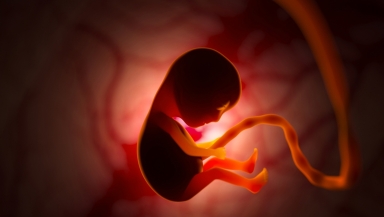
The scientists working on the project successfully fertilised a number of artificial eggs with sperm, some of which began growing into embryos. The embryos were terminated after six days, which is the point at which embryos are transferred to the womb in IVF procedures.
However, before even considering ethical questions, the process is far from perfected. Of the 82 fertilised eggs created, only nine per cent developed into embryos and all of these had chromosomal abnormalities.
Speaking to The Telegraph, Dr Paula Amato, a professor in obstetrics and gynaecology at Oregon Health and Science University, said, “In theory, the technique could result in a limitless number of eggs.
“The skin cell DNA however can come from anyone, even if they personally don’t have any eggs or remaining eggs – older women, women after cancer treatment, people born without eggs, men ... So, it’s a way to produce eggs genetically identical to the person providing the skin cell, even if they personally don’t have any eggs, and allows them to reproduce to have a genetically-related child.
“A same-sex male couple could potentially have a child genetically related to both partners.”
Dr Amato also noted the problems with the created embryos, saying that all had either too many chromosomes, too few, or did not have one from each pair.
“These would not be expected to develop further into a normal baby,” she said.
A number of scientists have hailed the development as a great breakthrough, though one that is still very much in the early stages.